
The International Baccalaureate (IB) is continuing to extend its reach by working more closely with South Korean government education institutions. This reflects a growing emphasis on integrating international education standards into the domestic education system and improving the overall quality of education in South Korea.
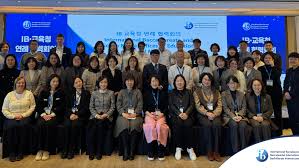
The IB South Korea branch held its annual in-person meeting on 13 January 2026 in Seoul. The meeting brought together 33 education officials and supervisors representing 12 South Korean Offices of Education, highlighting strong engagement at the national level.
Why Is the IB Strengthening Its Partnership in South Korea?
The IB’s engagement with South Korea began in 2019 through initial Memorandum of Cooperation (MOCs) with regional education authorities, including Daegu and Jeju. Since then, the partnership has expanded significantly, with agreements now in place with 12 out of 17 Offices of Education across the country.
This expansion highlights South Korea’s growing openness to global education frameworks that emphasize critical thinking, inquiry-based learning, and international-mindedness. The IB approach aligns with the country’s efforts to modernize education and prepare students for global challenges.
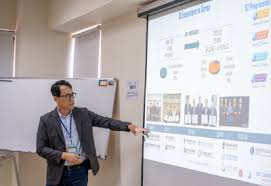
The meeting was led by Yoon Byun, Head of Community Partnerships and Development, who emphasized that implementing IB programmes requires more than structural change. It involves transforming teaching practices, school culture, and educational leadership. Strong partnerships, he noted, are essential to building a unified educational ecosystem.
How Is the IB Expanding Across South Korean Schools?
There has been quite some expansion in the IB programs in South Korea. According to the numbers for 2026, there are 110 official IB world schools currently operating in the nation, together with 155 candidate schools applying for the certification. Moreover, there are almost 300 schools that are interested in adopting IB programs in the near future.
This increasing interest suggests that there is a change in attitude towards the type of education that needs to be provided. With its focus on whole development, student-centered curriculum, and global outlooks, IB programs are becoming increasingly popular with teachers and officials alike.
Among other issues discussed at the meeting were the major accomplishments during the previous year and the future priorities for sustainable growth.
What Are the Key Focus Areas for Sustainable IB Implementation?
One of the main themes discussed was teacher wellbeing and professional development. Participants emphasized the importance of supporting teachers, recognizing their central role in the success of IB programmes.
Efforts are underway to develop high-quality workshop leaders and align training with South Korea’s 2022 National Curriculum Reform. This ensures that IB frameworks complement national education goals rather than operate independently.
The IB authorization process was also discussed as a continuous developmental journey, rather than a one-time achievement. Schools must adapt IB methodologies to suit their unique contexts.
This perspective was reinforced by Han Yang-hee from the Chungnam Office of Education, who highlighted the importance of differentiated support. She noted that each school has distinct challenges, making a one-size-fits-all approach ineffective.
What Does This Partnership Mean for the Future of Education?
The strengthened partnership between the International Baccalaureate (IB) and South Korean Offices of Education signals a long-term commitment to enhancing public education through innovation, collaboration, and global integration.
Discussions also focused on improving communication strategies to support university admissions pathways, ensuring better recognition of IB qualifications both locally and internationally.
By prioritizing sustainable growth, teacher support, and context-based implementation, the IB is contributing to a more future-ready education system in South Korea. This partnership demonstrates how international education frameworks can be effectively integrated into national systems.
As the IB continues to expand its presence, it is expected to play a key role in shaping the future of education in South Korea, offering valuable opportunities for students, educators, and institutions.
Here’s a detailed explanation of the “7 Key Benefits of IB Partnership with South Korean Education Offices”, based on how the International Baccalaureate collaborates with South Korea’s public education system.
1. Shift to Student-Centered Learning
One of the biggest benefits is the transition from traditional exam-focused education to student-centered, inquiry-based learning.
- IB emphasizes questioning, discussion, and exploration rather than rote memorization.
- Korean classrooms adopting IB methods show more interactive and engaging lessons.
This is a major shift in a system historically known for standardized testing pressure.
2. Strong Development of Critical Thinking Skills
Students in IB programmes consistently show improvement in:
- Analytical thinking
- Problem-solving abilities
- Independent reasoning
In fact, studies in South Korea found that enhancing thinking skills is the most recognized benefit (over 60%) among students.
3. Improved Self-Directed Learning
The IB partnership encourages students to take ownership of their learning.
- Students learn how to research, manage time, and reflect on their progress
- Promotes lifelong learning habits, not just exam preparation
This aligns with South Korea’s goal to move from “cramming knowledge” to learning how to learn.
4. Enhanced Global Perspective & Citizenship
IB programmes are designed to develop international-minded learners.
Through this partnership, students gain:
- Awareness of global issues
- Cultural understanding
- A broader worldview
Students reported increased global citizenship awareness as a key benefit of IB education.
5. Higher Student Engagement and Participation
Compared to traditional classrooms, IB-based learning leads to:
- More active class participation
- Greater collaboration among students
- Increased interest in subjects
Research shows that nearly half of students reported improved engagement in class after IB implementation.
6. Teacher Professional Growth and Innovation
The partnership doesn’t just benefit students—it also transforms teaching.
Teachers gain:
- Access to international training and best practices
- Freedom to use diverse teaching strategies
- Opportunities for global collaboration
IB educators in South Korea highlighted professional growth and exposure to new teaching tools as a major advantage.
7. Strengthening Public Education Quality
At a system level, the partnership helps South Korea:
- Improve the quality and credibility of public education
- Reduce over-reliance on private tutoring
- Build a more future-ready, competency-based system
Recent developments show that expanding IB programmes is part of a broader strategy to enhance student capabilities and reduce educational gaps.