

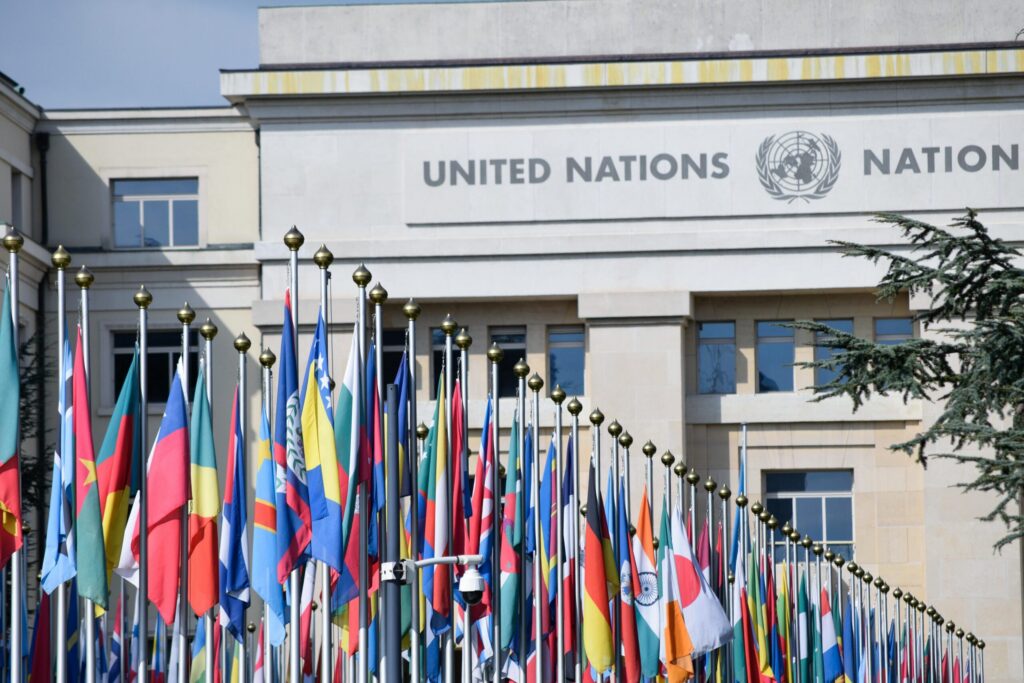
IB tourism education is about to change, and the partnership behind it involves two of the most influential organisations in the world.
Tourism is one of the largest industries in the world. It is responsible for hundreds of millions of jobs, for shaping the economies of dozens of countries and for connecting disparate cultures in a way very few other industries can. And, until now, real education within it was pretty much left to universities.
All that is about to change.
What the IB Tourism Education Partnership Actually Involves
The MoU sets out three ways IB tourism education will develop three areas of collaboration. Firstly, joint creation of initiatives to develop the knowledge and skills of young tourism students. Secondly, capacity building and professional development for students hoping to join the sector. And thirdly, continuous consultation between the two organisations to respond to the changing needs of education and industry.
What is noticeably absent, at least for now, from the agreement is a specific curriculum or qualification. This is not a declaration that the IB is introducing a tourism diploma. It is the first step in a lengthy process that will see a new approach to tourism education defined at high school level, one grounded in the realities of business rather than the somewhat impractical abstractions of traditional academic models.
Whether this is refreshingly pragmatic or infuriatingly vague is down to individual interpretation. But in light of what sometimes occurs when qualifications are hastily pushed into classrooms without adequate preparation, taking the time to develop it properly seems the right call.
Why Both Sides Say This UN Tourism IB Partnership Matters
UN Tourism Secretary-General Zurab Pololikashvili was candid about the problems this partnership aims to tackle. “Quality tourism education for all is essential to supporting our young people and providing them with the opportunities to work and thrive within our sector,” he said. “In collaboration with the International Baccalaureate Organisation, we will strive to equip high school students with the relevant skills and knowledge that are sought after by businesses in the tourism industry.”
The emphasis on skills that tourism businesses actually need, rather than ones that simply look good on paper, is worth noting. For years those same businesses have been saying that graduates arrive unprepared for the realities of the industry, particularly around sustainability, cross-cultural understanding and the kind of practical problem solving that no classroom exercise can perfectly replicate.
From the education side, IB Director General Olli-Pekka Heinonen explained the rationale clearly. “Education plays a pivotal role in shaping industries, fostering inter-cultural relations and instilling responsibility within a globalised economy,” he said, “whereas tourism is fundamental to bringing cultures, communities and economies together. This alliance with UN Tourism will facilitate the IB’s efforts to provide young people with practical skills for the ever-expanding tourism sector.”
The IB’s programmes, particularly CAS, the Extended Essay and project-based learning within the MYP, already develop skills with real-world applicability. Integrating formal tourism education into that framework is a natural progression rather than a departure.
What This Means for IB Students Right Now
The short answer at the moment is that much depends on how quickly the partnership moves beyond the MoU and into actual curriculum content.
However, the fact that tourism is being treated as a career path worth preparing for at high school level, rather than as a postgraduate pursuit, is significant in itself. For IB students with an interest in hospitality, travel, sustainability or international business, this provides a more formal home for those interests within an academic framework.
The partnership is equally important for students in regions where tourism is a primary economic contributor. In many parts of Southeast Asia, the Caribbean, sub-Saharan Africa and the Middle East, tourism is not merely a job sector but the bedrock of how local communities sustain themselves. High school students in those regions now have a clearer pathway into an industry they already understand from the ground up, built around skills that transfer globally rather than ones tied to a single location.
The IB’s international network, spanning more than 150 countries, means a tourism education pathway developed through this partnership does not stay in one place. It travels with the curriculum.
The Bigger Picture: Why Tourism Needs Younger Talent
The reasoning behind this partnership is concrete and worth naming plainly.
The global tourism sector is expanding faster than it can recruit and train the skilled workforce it needs to operate effectively and ethically. Sustainable tourism, cultural heritage management, community-based travel and technology-driven hospitality all require innovative, forward-thinking approaches that are best developed early, through curricula that take inquiry, ethics and global perspectives seriously.
Of all high school frameworks, the IB offers the closest fit for all three. The partnership with UN Tourism is the industry acknowledging that directly.
Whether the MoU translates into actual teaching and assessment opportunities within the next few years remains to be seen. But the direction of travel is set, and for students seeking a career at the intersection of travel, sustainability and international culture, this collaboration is a meaningful step forward.
Sources: UN Tourism