

IB Australia education in 2026 took a significant step forward when a senior delegation visited Melbourne to ask a question that sits at the heart of modern schooling.
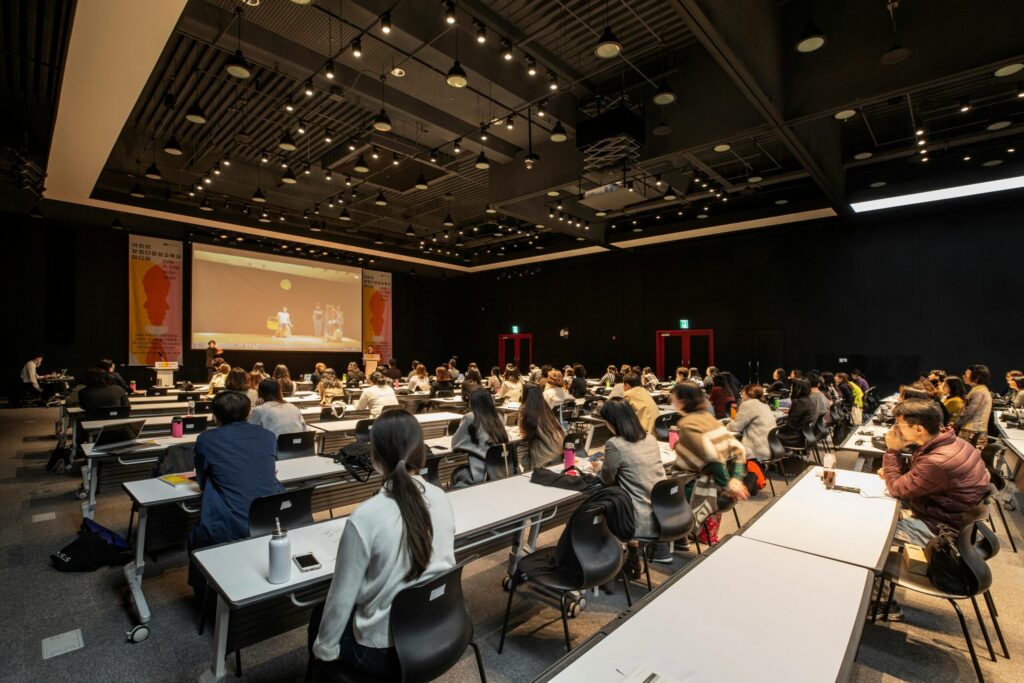
A senior IB delegation, led by Board Chair Helen Drennen and Director General Olli-Pekka Heinonen, spent four days in Melbourne from 6 to 10 May, where the 160th meeting of the IB Board of Governors took place. The programme included school visits, classroom observations, and a deep engagement with the University of Melbourne’s Melbourne Metrics team on the future of competency-based assessment.
Why This Visit Was Different
School visits by senior education figures often look better on a press release than they do in practice. This one had more substance than most.
The centrepiece of the visit was the IB’s ongoing strategic collaboration with Melbourne Metrics at the University of Melbourne. The two organisations are working together to explore competency-based assessment as a tool for transforming teaching and learning. The idea is not to replace traditional knowledge-based models but to work alongside them, capturing a fuller picture of how students are actually developing.
The delegation engaged directly with Professor Sandra Milligan, Executive Director of Melbourne Metrics, and a group representing Carey Baptist Grammar School presented to the board. The IB also visited Wesley College and Woodleigh School, where students and educators showed how the IB framework plays out in real classroom practice rather than in policy documents.
Heinonen was direct about what is driving all of this. “If we want education to prepare young people for an increasingly complex world, we must be willing to ask whether our assessment systems recognise the full range of what matters,” he said. “Our collaboration with Melbourne Metrics and schools in Australia is helping us explore future models of assessment that are rigorous, evidence-based and aligned with a broader vision of human flourishing.”
That last phrase, education for human flourishing, is not new language for the IB. What is new is the seriousness with which they are trying to build assessment frameworks that actually deliver on it.
What the Research Says About IB Students in Australia
The visit coincided with some significant findings from the Australian Council for Educational Research that are worth knowing about.
Australian IB Diploma Programme students consistently outperform non-IB peers on university admission rates, persistence into second year, and overall completion rates. The finding that stands out most is this: students from lower socio-economic backgrounds within the IB show comparable success to peers from higher socio-economic backgrounds. That is not a small thing. It suggests the IB framework has something to offer beyond selective, well-resourced schools.
A separate ACER study found that PYP and MYP students in Australia outperform peers on global benchmarks across every grade and subject area analysed, across a dataset of 71,267 students. In no case did non-IB students significantly outperform IB students.
These are not figures the IB commissioned to make itself look good. They come from an independent research body, and they point consistently in the same direction.
The Public School Visit That Deserves More Attention
Alongside the board-level activity in Melbourne, IB Chief Community Partnerships and Development Officer Nicole Bien visited Kunyung Primary School in Mt Eliza, Victoria.
Kunyung is a government school, managed by the Department of Education in Victoria. It has been offering the IB Primary Years Programme since 2011. It is not a fee-paying independent school with exceptional resources. It is a state school that chose to bring the IB framework into a public setting and has been doing it for fifteen years.
What it demonstrates is something the conversation around IB access often misses. The PYP can work in a government school. Inquiry-based learning can coexist with state curriculum mandates. And the foundational literacy and numeracy priorities that are a national focus in Australia do not have to compete with broader student development. They can be addressed together.
Bien put it plainly: “Remarkable schools like Kunyung are showing how the PYP can strengthen students’ literacy and foundational skills while also supporting their wellbeing and social-emotional development. By emphasising learner agency, creativity, differentiation, and personalised learning, Kunyung embodies the IB’s inquiry-based approach while meeting the most pressing needs of the community it serves.”
The Bigger Picture for IB in Australia
The IB has been in Australia since 1978. It currently offers programmes across 196 schools, from Perth to Tasmania. That is a long track record, and the research increasingly backs up what those schools have been doing.
The visit also lands at a particular moment for Australian education policy. As the country works through the implications of the Australian Universities Accord, which focuses on building a skilled, future-ready workforce, the IB’s model of developing creative thinking, resilience and international mindedness aligns naturally with where the policy conversation is heading.
Whether that alignment translates into broader government support for IB access in public schools remains to be seen. But the Kunyung example, a state school running the PYP successfully for fifteen years, is a proof of concept that is hard to dismiss.
Sources: IBO